








Steven Pinker’s Better Angels of Our Nature

November 23rd, 2011 3 comments

The Better Angels of Our Nature by Steven Pinker

Whether you agree or not with the premise made in Steven Pinker’s new book, The Better Angels of Our Nature, it cannot but help to provoke a great deal of interest in anyone who thinks and cares deeply about the human condition. The significant amount of media attention given to the book suggests that we humans, as a species, have a strong need to understand (or wish to believe) that we, as a species, are making progress as moral beings.

Pinker thinks so. I would like to think so, too. But I am not so sure. He begins with this assertion in the Preface,

This book is about what may be the most important thing that has ever happened in human history. Believe it or not — and I know that most people do not — violence has declined over long stretches of time, and today we may be living in the most peaceable era in our species’ existence.

With already too many people following me around (read: books) like a phantom of the library, I am far from being in the position of reading, cover to cover, Pinker’s 700 plus page book. Nevertheless, I could not resist.

Since its arrival, I periodical find myself, when I have the spare time, to not read it from cover to cover but to dip into and out of it as the moment takes me. Of course, I would like to read it from the beginning to the end. That is not likely for the time being. Further, it is a book that I think I should study as there is a lot of material in it of interest and relevance to my own research and writing. I must, therefore, make the time for it.

All this preamble is my way to lead you into the dilemma I now found myself with the book.

I have read something in it that I know is not true. Pinker states otherwise. In fact, it is such a blunder that I can not believe he has made it. Further, it is a significant, pivotal point in his argument about our moral evolution. He writes in the chapter entitled ‘The Rights Revolutions’ in the subsection called ‘Animal Rights and the Decline of Cruelty to Animals’ the following:

But any intuition that vegetarianism and humanitarianism go together was shattered in the 20th-century by the treatment of animals under Nazism. Hitler and many of his henchmen were vegetarians, not so much out of compassion for animals as from an obsession with purity, a pagan desire to reconnect to the soil, and a reaction to the anthropocentrism and meat rituals of Judaism. In an unsurpassed display of the human capacity for moral compartmentalization, the Nazis, despite their unspeakable experiments on living humans, instituted the strongest laws for the protection of animals in research that Europe had ever seen. Their laws also mandated humane treatment of animals in farms, movie sets, and restaurants, where fish had to be anesthetized and lobsters killed swiftly before they were cooked. Ever since that bizarre chapter in the history of animal rights, advocates of vegetarianism have had to retire one of their oldest arguments: that eating meat makes people aggressive, and abstaining from it makes them peaceful. (462)

Now, it is possible that buried elsewhere in the 700 pages Pinker refutes the claim that Hitler et al were vegetarians and the Third Reich were the forerunners of the contemporary animal rights movement. I just have not come across … yet.

Having got this benefit of the doubt out of the way, I am left with asking: How can someone as smart as Pinker get it so wrong?

Hitler was no more a vegetarian than the Third Reich gave birth to the contemporary animal rights movement. This nonsense is usually written by those who oppose animal rights and have a financial vested interest in the commercial exploitation of animals. But a world-renowned psychologist and author studying the behavioural and moral development of our own species?

Nevertheless, I will continue to read the book. But all the pleasure, excitement and the anticipation of discovering new things and ideas, well, they are long gone. Which is such a shame.


Post to Twitter

Categories: Animal Rights, Books Tags:

Our Hen House Interview

November 21st, 2011 No comments

A big part of the fun of Our Hen House is listening to Mariann Sullivan and Jasmin Singer banter and bicker with each other.

The good folks at Our Hen House, Mariann Sullivan and Jasmin Singer, recently interviewed me and our chat, which ranged over a number of issues, was published as part of Episode 97. You can listen to it here.

Our Hen House is a fantastic resource for anyone who cares about animals. It’s fun, upbeat and always interesting. But there’s a serious side, too. The Our Hen House Web site is also a rich source of information and resources on animal rights and vegan living.

In our conversation we explored such issues as the Animals and Society Institute, similarities and differences in animal rights and veganism between the UK and USA and gay rights and animal rights. I also spoke about my four key values — truth, compassion, nonviolence and interbeing — which I explore in my forthcoming book, Animal Dharma.

I recommend listening to this episode not only for my interview but also for all the other interesting features it includes. And while you’re at it, I suggest checking out previous podcasts.

Post to Twitter

Marti Kheel

November 21st, 2011 No comments

Marti Kheel

Along with Carol J. Adams and Batya Bauman, Marti Kheel in the 1990s and thereafter made a tremendous impact on my thinking about our relationship with animals.

They introduced me to ecofeminism and my understanding of what animal rights meant to me deepened both professionally and personally.

It is with this is in mind that it is with great sorrow that I note here Marti’s recent death from leukaemia.

If there is one thing that I think we can to do to remember Marti it is to read her excellent book, Nature Ethics: An Ecofeminist Perspective. Here’s one of my favourite insights:

Outside the field of ecofeminism most nature philosophers continue to ignore the relevance of gender to destructive practices toward nature. A holistic ecofeminist philosophy, in contrast, begins by naming this reality. It seeks to identify not only the dualistic ideologies that perpetuate the abuse of nature, women, and marginalized others, but the ways in which those ideologies are intertwined with psychosocial identities. Ecofeminists must also turn their critical analysis to the field of nature ethics, remaining alert to residues of masculinism within other nature philosophies. Although identifying the influence of gender on moral conduct and thought will not eliminate masculinism, it can provide a first step toward destablizing its influence. (p.218)


Post to Twitter

Animal Studies Update

November 18th, 2011 No comments

Mediating Climate Change by Julie Doyle

Attending last evening’s launch of two new Animal Studies books at the University of Brighton, I was reminded, once again, of the generational shift currently underway in which young people who had grown up in a climate of increased public awareness of animal rights and environmental advocacy are now ascending into positions of authority in society.

The reception I attended was to launch Mediating Climate Change by Julie Doyle and Popular Media and Animals by Claire Molloy. I had not met either authors before; however, I had been encouraged to get in touch with Claire because of our shared interests and close proximity. She teaches at the University of Brighton and at its campus in Hastings, where I live; however, she is shortly to leave and start teaching next year at Liverpool Hope University.

Popular Media and Animals by Claire Molloy

I learnt both were vegans and had a history of social justice activism. Julie’s with Greenpeace in Brighton and Claire’s with animal welfare/rights. Their journey from advocacy into academia signifies the generational shift I began this blog with.

Congratulations to both on making this transition and on the publication of their respective titles, which I look forward to reading!


Post to Twitter

Categories: Books Tags:

Zoo Licensing

November 15th, 2011 No comments

Sadly, I am unable to attend but I urge those who can to attend the Association of Lawyers for Animal Welfare seminar, ‘Zoo licensing – is the regulatory regime working?,’ on Wednesday, November 30 November, 5.30pm – 7pm, in the House of Commons.

The speakers include

  • Andrew Rosindell MP, Chair, All Party Parliamentary Group on Zoos and Aquariums
  • Miranda Stevenson, Executive Director, British and Irish Association of Zoos and Aquariums
  • Chris Draper, Senior Animal Welfare Scientist, Born Free Foundation
  • Liz Tyson, Director, Captive Animals’ Protection Society
  • Anna Meredith, Acting Chair of the Zoos Expert Committee and a zoo inspector (appointed by Scottish Ministers)
  • Brian Bertram, member of the Zoos Expert Committee and a zoo inspector for England

The discussion will focus on the effectiveness of the current system of zoo regulation and ask whether the regime is fit for purpose. It will be chaired by Alan Bates, barrister at Monkton Chambers. The main session will be followed by the usual end of year legal update.

To reserve your place on this seminar, please email info@alaw.org.uk indicating the number of places you would like to reserve. Places are offered on a first come, first served basis. Fee: £15.00 waged/£5.00 student rate. Places are free to ALAW members. To join please download a membership form from the ALAW website.

Post to Twitter

Animal Law in Barcelona and Stuff

November 11th, 2011 No comments

Since my last post is nearly one month ago, a word of explanation is owed to explain what has been happening. This intervening period has been dominated by two things: Barcelona and moving to a new office.

The Universitat Autónoma de Barcelona held toward the end of October the first conference on animal law in Europe. The organiser, Professor Marita Candela, kindly invited me to speak. I wrote about the conference on the blog of the Animals and Society Institute. Also, I had posted onto the same blog a report of two Animal Studies conferences I had attended earlier in the month. They were both excellent.

The text of my talk in Barcelona, Animal Rights and Public Policy, is available to read here.

On my return from Barcelona, I began immediately to move to a new office. This involved moving the office I had set up at home and materials I had put into storage into one location. The bulk of the stuff I moved belongs to my archive. The collection now consists of some 2,000 plus books, six four-drawer filing cabinets of papers of various kinds, audio-visual materials and artefacts (e.g., badges/buttons, display materials, artwork). It’s great to have all this material under one roof. I use my archive as a resource for the work I currently do for client organisations and the books I am currently writing and researching. Further, I plan to catalog further and digitise my collection to make it more widely available. Presently, my collection of books is catalogued here. With the dotage years approaching more quickly than one would like, I will prepare at some point a Request for Proposals from interested parties (e.g., universities, archives, organisations) who may be interested in acquiring the collection. It is a truly unique collection which I would see form part of an institution that uses for educational and research purposes.

With no immediate travel plans and the move out of the way but not all the unpacking and sorting, my focus turns increasingly to working on my book, Animal Dharma, and meeting the needs of my clients, including those I volunteer for.

Post to Twitter

Blog Action Day: Food

October 16th, 2011 No comments

Today is Blog Action Day–the annual international celebration of blogs, which, this year, is dedicated to food, as it coincides with World Food Day.

My message to the world about food is that there is nothing better than a vegan diet. It is compassion in action for the animals, embraces environmental protection, facilitates world development and helps to prevent hunger, and is good for our own health.

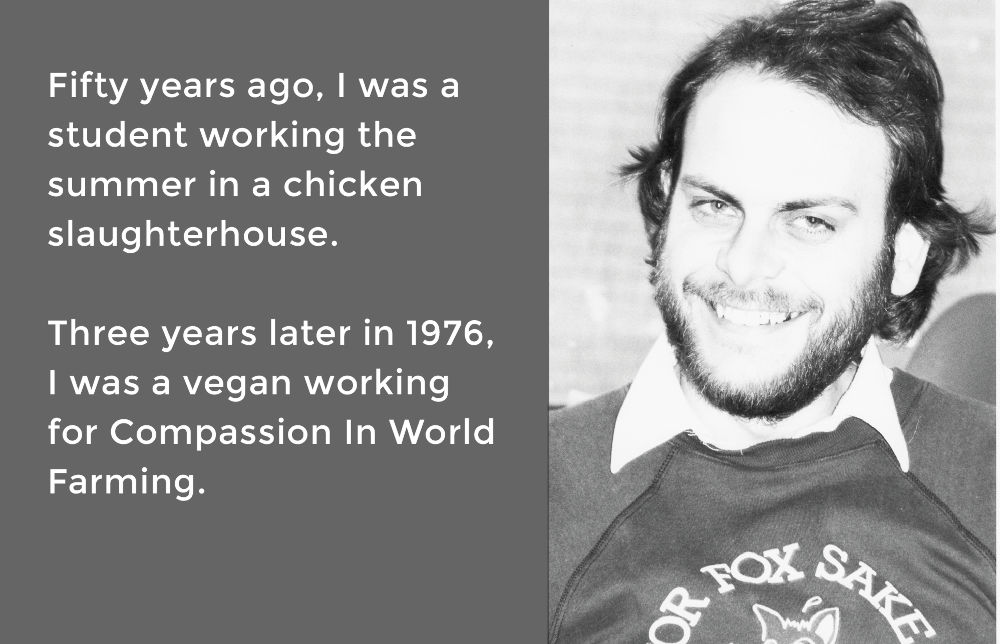
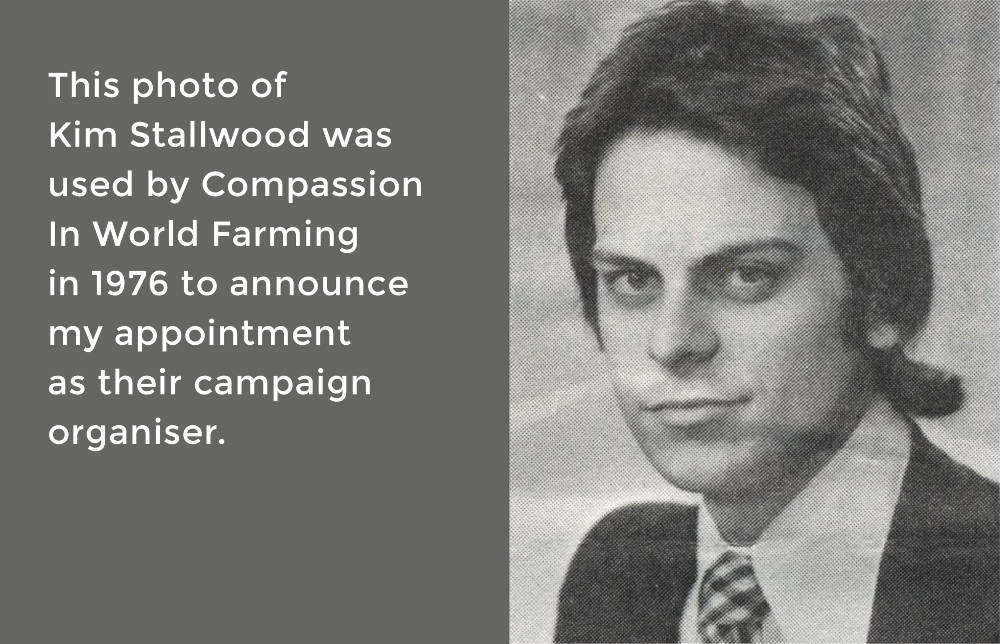
I have been a vegan since 1976 after working in a chicken slaughterhouse. Whatever inconveniences I have personally felt over the years pale into comparison when the benefits are considered.

There is no reason why everyone cannot be a vegan.

Post to Twitter

Wall Street Animals

October 10th, 2011 No comments

My Animals and Society Institute colleague, Bee Friedlander, writes on the ASI Diary (blog) about the protest underway on Wall Street.

Anyone who hasn’t been hiding under a rock this past week has heard about “Occupy Wall Street,” a movement that seemingly has come out of nowhere, beginning in New York City a few weeks ago, and now spreading each day to more cities small and large across the United States. Is it the Arab Spring come to the U.S.? An incarnation of the 1960s student movement? A progressive version of the Tea Party?

Bee goes on to consider the presence of a concern for animals as part of this protest, including as an integral part of an emerging social movement with broad objectives challenging the present social and economic norms. Bee quotes from various people involved with and commenting on this initiative, including yours truly. She concludes,

A core belief of the Animals and Society Institute is that institutional change for animals and future success of the movement depend on our ability to position animal issues in the arena of public policy, including action in the mainstream political arena. Perhaps the activists will come to see the same is true for the other worthy causes they espouse.

She speaks for me in this regard.

Post to Twitter

ASI E-Newsletter

September 26th, 2011 No comments

The E-newsletter published by the Animals and Society Institute, which I strongly recommended everyone subscribe to, included recently a letter from Britain by yours truly.

Kim Stallwood Busy Minding Animals

Our European Director, Kim Stallwood, is busy organizing and participating in a variety of activities related to international efforts on behalf of animals. He sends this report:

Minding Animals International functions as a bridge between academia and advocacy. MAI consists of a network of more than 2,500 academics, artists, activists and advocates, dedicated to the study and protection of all planetary life through the advancement of Animal Studies. It organized a highly successful conference in Australia in 2009, and the next will be in Utrecht next year.

As the volunteer deputy CEO of MAI, I will be attending a meeting of its board in London on October 6. My ASI colleague, Ken Shapiro, also serves on the board but is sadly unable to attend. I’m honored to represent ASI’s interests in MAI.

Also, I will be attending two one-day conferences immediately after the board meeting. They are Animal Citizens, which will be held at the London School of Economics, and Animal Ecologies in Visual Culture, which is organized by Antennae, the online journal of nature in visual culture.

On October 24-25, I will be speaking about Animals and the Law at the Universitat Autònoma de Barcelona.

Kim will keep us updated on his activities, and can be reached directly at kim.stallwood@animalsandsociety.org.

Post to Twitter

Some Thoughts on Abolition and Regulation

August 3rd, 2011 5 comments

A recent New York Times oped was brought to my attention by a long standing friend and colleague. She situated it within the context of the debate surrounding the announcement by The HSUS and United Egg Producers, a debate which brings into focus the perennial issue among most if not all social movements: regulation vs. abolition.

The understanding behind The HSUS and UEP wanting to make such an agreement is generally to be welcomed. There are, of course, aspects to it that give me considerable concern; however, I wasn’t a participant in the discussions and can only comment as an observer. Nevertheless, I am a participant in the campaign against factory farming since the mid-1970s and subsequently witnessed its development in the UK and US. Of course, on the face of it, banning cages for egg laying chickens is, for a vegan like me or anyone opposed generally to factory farming, as straightforward as anything can be. Nevertheless, I have come to appreciate the complexity of achieving this simple change is considerable. Significant progress has been made in the European Union which is scheduled to outlaw the battery cage by January 1, 2012. Now, this ban is for the barren battery cage. In other words, a cage is a cage is a cage. Alternative so-called enriched cages are proffered as an alternative, which is something I — and Compassion In World Farming whose lead I follow in such issues — reject as a satisfactory alternative. [And, coincidentally, The HSUS.] In short, if people are going to eat eggs, well, they’ve got to eat less and only eat those from chickens in organic, free range, nonlethal conditions. But, as a vegan, I, of course, don’t recommend anyone to eat eggs, anyway.

And herein lies the tension between abolition and regulation. Much ink has been spilt on this purported conflict not only in the animal rights movement but also in other social movements. For example, Gary L. Francione and Robert Garner explore this issue thoroughly in The Animal Rights Debate (Columbia University Press, 2010). One of the more nuanced reviews of this book is by Ben Mepham.

Turning to The New York Times oped, “Obama and His Discontents,” by Ta-Nehisi Coates, I was struck (prompted by my correspondent) by the comparison between the animal welfare/rights debate and the present American political conflict between Democrats and the Republicans and their even more extreme political sidekicks, which is all framed within the context of Lincoln’s Emancipation Proclamation — a compromise that freed only the slaves in rebel territory, as Coates notes.

Coates concludes about President Barack Obama that he is

of course, is not an activist but a politician held accountable by a broad national electorate. He is thus charged with the admittedly difficult task of nudging the country forward, even as he reflects it. That mission necessitates appreciating the art of compromise, but not fetishizing it.

Now, I can be as guilty as the next person of reading into something that which I wish to read. Nevertheless, I read this op ed to say that abolitionists and pragmatists must work together in order to achieve any change. This is the message I’ve been saying for decades. See, for example, my chapter, “Utopian Visions and Pragmatic Politics,” in Robert Garner’s anthology, Animal Rights (Macmillan, 1996).

Success for any social movement, including animal rights, is predicated on balancing utopian visions with the pragmatic politics. It is simply the nature of how things get done. Neither one nor the other are entirely right or wrong. They are both needed. It is the fetishising of either that becomes problematic. It is a smart social movement that is capable of deploying both in creative and innovative as well as in a politically sophisticated and smart way.

I guess what all this boils down to is how one chooses to measure success or accomplishment. Further, there’s the context. I have more anxieties about animal rights groups treading the regulatory path when they proclaim themselves to be, er, an animal rights group. Conversely, this is why I’m comfortable with CIWF and how they implement this mission to end factory farming. Compassion was never an animal rights group. It was started by a farmer who was concerned about factory farming. It’s mission is to end factory farming. Whereas a group like Farm Sanctuary, say, which positions itself as a vegan, animal rights group, has, I believe, a conflict of interest with being involved with regulatory issues. On the other hand, HSUS is not and never will be an animal rights group. Therefore, it does not have issue with being involved with regulatory issues. The trick to success is getting these groups and as many as possible of all the others to play as musicians in a complex orchestra challenged with playing music outside of their repertoire.

There is a further point to make about the ideology of welfare and rights. They each work in some contexts but not in all. For example, as philosophy and as strategy, they both work but with some inherent challenges, particularly when the margins are pushed. In the mainstream political context, however, their values as ideologies informing what could and should be done politically in the terms of laws passed is even more challenging. It is much more difficult to implement the rights ideology (than, say, the welfare ideology) in the present mainstream political climate. So, with rare exceptions, compromise (i.e., welfare) is almost inevitable. But this should not mean we should not work in the mainstream political arena. We must. What other option is there available? I simply do not buy into the argument to work exclusively for vegan education. I am realistic enough (and, admittedly, cynical enough) to recognise not everyone is capable of or wants to go vegan. People still smoke cigarettes even when they know they are a waste of money and will most likely cause diseases that may kill them. So, what is to be done? Make meat, eggs and dairy a prescribed substance like tobacco and other legal and illegal addictive substances? Maybe. Maybe not. I am not sure on this one. The jury is still out for me. There is mileage, however, to position meat, eggs and dairy like tobacco and alcohol in the terms of their societal cost and instituting regulatory state actions to restrict their sale and consumption. But the vegan abolitionists will not like that strategy as they are not prohibitions. Our history documents well enough that prohibitions do not have a very successful track record.

In fact, I do not think the animal rights movement has tried hard enough to work within the political mainstream. If we were to become, as a social justice movement, less obsessed with personal transformative moments and lifestyle purity and more sophisticated about the political, economic and social power which keeps the animal industrial complex in place AND understand this within the larger political, social justice context, well, then, I think we might get somewhere.

Post to Twitter